Articles · Hints & Tips
Why Your Competitor Is Ranking Above You on Google
Wondering why a competitor appears above your business on Google? Here are the common reasons, from website speed and mobile usability to local SEO, content, trust signals, and Google Business Profile activity.
You know the feeling.
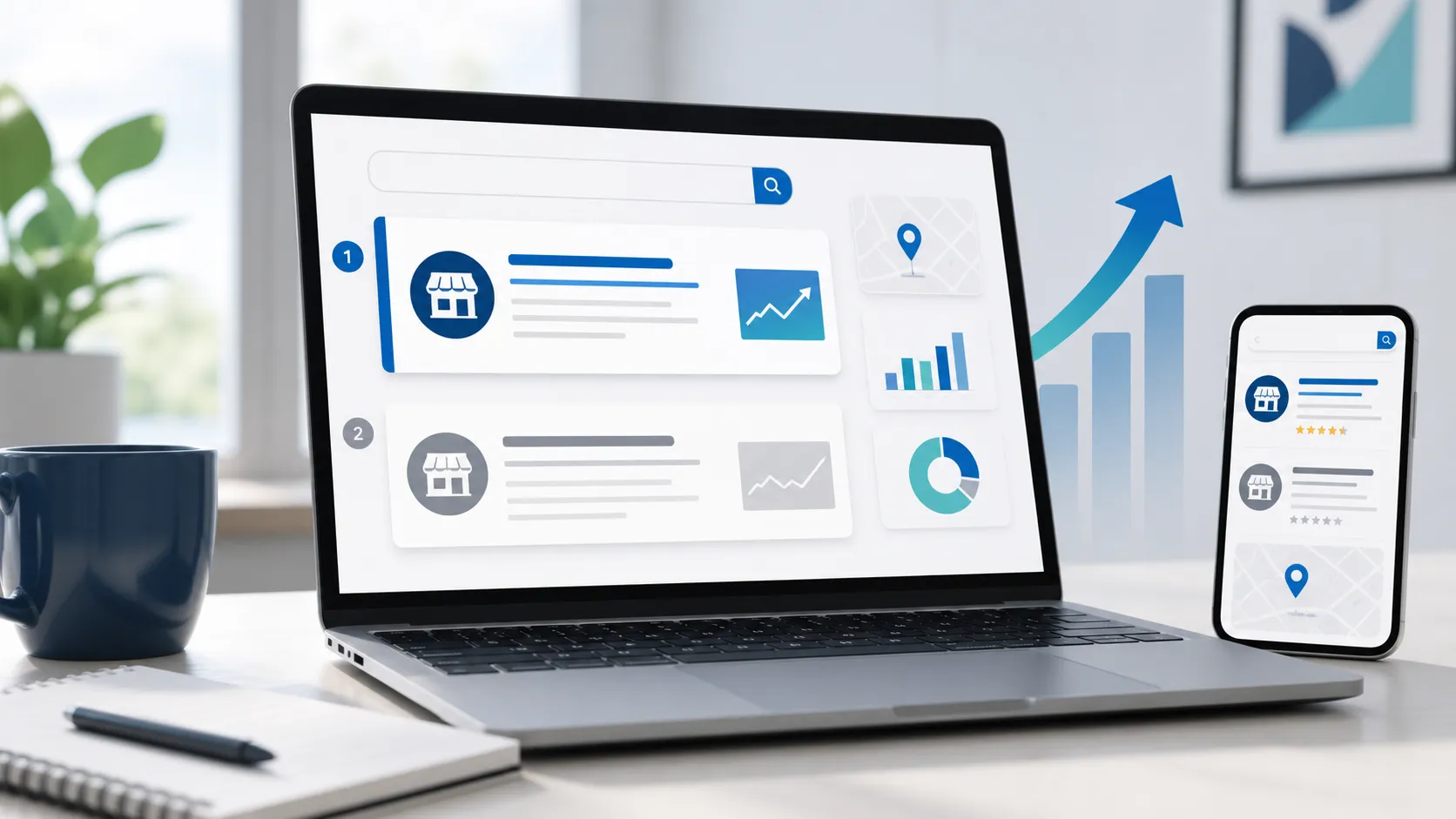
You search for your service on Google expecting to see your business near the top...
...and instead you find:
- your competitor
- another competitor
- somebody with a worse logo than yours
- and somehow a business whose website still looks like it was built during the Windows XP era
Meanwhile your business is buried halfway down page two wondering what happened.
Frustrating? Absolutely.
But here is the thing: ranking well on Google usually is not random.
There is normally a reason your competitor is above you.
Actually, there are usually several reasons.
The good news? Most of them can be improved.
So let us break down some of the biggest reasons your competitors might be outranking you, especially for local searches across Blackpool and the Fylde Coast.
1. Their Website Is Faster Than Yours
This is one of the biggest factors we see.
Modern websites need to be quick.
Not "fairly quick." Not "loads eventually."
Actually fast.
People are impatient online, especially on mobile devices. If your website takes too long to load, visitors leave, and that can affect how well your site performs in search.
Why Website Speed Matters
Google wants to send users to websites that provide a good experience.
That includes:
- fast loading times
- smooth mobile performance
- responsive pages
- low frustration
If your competitor's website loads instantly while yours struggles under the weight of:
- giant images
- bloated plugins
- sliders
- unnecessary scripts
...they may have the better foundation.
Even if your actual business is better.
Harsh, but true.
If performance is a known weak spot, our fast UK web hosting and modern build approach can help remove a lot of the drag that holds older sites back.
Slow Websites Also Lose Customers
Ranking is not the only issue.
A slow website often means:
- fewer enquiries
- higher bounce rates
- lower trust
- reduced conversions
So even if people do find your site, performance problems can still hurt your business.
2. Their Website Is Better on Mobile
Most local searches now happen on phones.
Not desktops.
Phones.
People search while:
- walking around town
- sitting in vans
- watching TV
- queueing for coffee
- pretending to listen in meetings
If your website is awkward on mobile, visitors leave quickly.
And over time, that can make it harder to compete.
Common Mobile Problems
A lot of websites still struggle with:
- tiny text
- awkward menus
- slow loading
- oversized images
- buttons too small to tap
- broken layouts
A properly mobile-friendly website should feel:
- fast
- clean
- simple
- easy to navigate
Good responsive web design is not just about squeezing a desktop website onto a smaller screen. It is about making the mobile experience feel natural from the first tap.
3. They Have Better Local SEO
This is huge for businesses in Blackpool and across the Fylde Coast.
Your competitor may simply be doing a better job of telling Google:
"We are relevant for this local search."
What Good Local SEO Looks Like
Strong local websites often include:
- location-focused pages
- local keywords
- optimised Google Business Profiles
- local content
- clear service areas
- locally relevant headings and copy
For example:
- "Web Design Blackpool"
- "Electrician in Fleetwood"
- "Builder Lytham St Annes"
These signals help search engines understand:
- where the business operates
- what services they provide
- who they are relevant for
That is why a proper search engine optimisation strategy should look at your website, your content, your local presence, and the way customers actually search.
Generic Websites Often Struggle
One common mistake is building a website that says almost nothing specific.
If your homepage just says:
"Welcome to our website"
...Google is not getting much useful information.
Neither are visitors.
4. Their Content Is Better
Content still matters massively.
Google wants to rank pages that:
- answer questions
- provide useful information
- match search intent
If your competitor has:
- better service pages
- useful blog posts
- helpful FAQs
- detailed local content
...they may simply be giving Google more reasons to rank them.
Thin Content Is a Common Problem
A surprising number of websites still have:
- tiny service pages
- copied text
- vague descriptions
- almost no useful information
That makes it harder for search engines to understand what the website should rank for.
Helpful Content Performs Better
The best websites explain:
- what they do
- who they help
- where they work
- why customers should trust them
Clearly.
Without endless waffle or corporate jargon.
5. Their Website Builds More Trust
Search engines pay attention to quality signals.
So do users.
A professional, trustworthy website can improve:
- engagement
- click-through rates
- enquiries
- visibility over time
Things That Build Trust Online
Your competitor may have:
- genuine customer reviews
- real photos
- recent projects
- strong branding
- HTTPS security
- fast load times
- clear contact information
Meanwhile many weaker websites still have:
- outdated designs
- broken pages
- stock photos from 2007
- no reviews
- missing information
All of that affects perception.
We covered this from a conversion angle in 5 reasons your website is losing you customers, because rankings and enquiries often suffer from the same underlying problems.
6. They Update Their Website More Often
That does not mean changing colours every week or endlessly moving buttons around for fun.
But regularly updating your website with:
- blog posts
- new pages
- updated services
- fresh content
...can help keep your site useful and relevant.
Many Websites Get Neglected
A lot of businesses launch a website and then ignore it for five years.
Eventually:
- information becomes outdated
- pages become stale
- competitors move ahead
Meanwhile businesses regularly adding useful content keep building authority over time.
7. Their Google Business Profile Is Stronger
For local businesses, your Google Business Profile is massively important.
Sometimes businesses focus entirely on the website and completely ignore their profile.
Meanwhile competitors are:
- collecting reviews
- uploading photos
- adding updates
- responding to customers
- improving local visibility
And they end up dominating local map results.
Reviews Matter More Than Ever
Reviews influence:
- trust
- click-through rates
- customer decisions
- local visibility
A business with:
- lots of recent positive reviews
- active engagement
- good response rates
...often performs far better locally.
If your profile has been left gathering dust, start with our guide to Google My Business SEO.
8. Your Website Might Be Technically Poor
Sometimes the problem is hidden behind the scenes.
Things like:
- broken pages
- poor site structure
- missing metadata
- duplicate content
- slow hosting
- indexing issues
...can all affect rankings.
And many business owners never realise there is a problem because the website "looks fine."
Search engines see much more than visitors do.
9. They Understand Search Intent Better
This is something many businesses miss completely.
Google does not just rank pages based on keywords anymore.
It tries to rank pages based on intent.
For example, somebody searching:
"emergency plumber Blackpool"
...probably wants:
- fast contact information
- reassurance
- emergency callout details
Not a 2,000-word essay about the history of plumbing.
Websites that match user intent usually perform better.
10. They Have Invested More Into Their Website
Sometimes the simplest answer is the correct one.
Your competitor may simply have:
- invested more time
- invested more effort
- invested more money
Into their website and SEO.
And over time, that work compounds.
The Good News? Most Rankings Can Improve
This is the important part.
SEO is not magic.
And rankings are not permanent.
A better website can absolutely help improve visibility over time.
Especially when you focus on:
- speed
- mobile usability
- local SEO
- better content
- trust signals
- technical improvements
Small improvements across multiple areas often create significant long-term gains.
Why Fast Modern Websites Have an Advantage
This is one reason modern, lightweight websites are becoming increasingly popular.
Fast websites typically provide:
- better user experience
- stronger mobile performance
- cleaner code
- improved Core Web Vitals
- better SEO foundations
Which helps both visitors and search engines.
Local Businesses Have a Huge Opportunity Right Now
Here is the reality:
A lot of local business websites across Blackpool and the Fylde Coast are still:
- slow
- outdated
- poorly optimised
- weak on mobile
That creates opportunity.
Because businesses willing to improve their online presence can often move ahead surprisingly quickly.
Especially in local search results.
Final Thoughts
If your competitor is ranking above you on Google, there is usually a reason.
Actually, there are usually several.
The good news is that most of those problems are fixable.
A faster website. Better content. Improved mobile performance. Stronger local SEO. More trust signals.
All of these things can help improve your visibility and bring in more enquiries over time.
Because at the end of the day, Google's goal is simple:
It wants to show users the best result.
The question is: is your website currently giving Google enough reasons to choose you?