
Articles · Hints & Tips
What Pages Should a Small Business Website Include?
Planning a small business website? Here are the core pages most local businesses need, what each page should do, and when extra pages are worth adding.
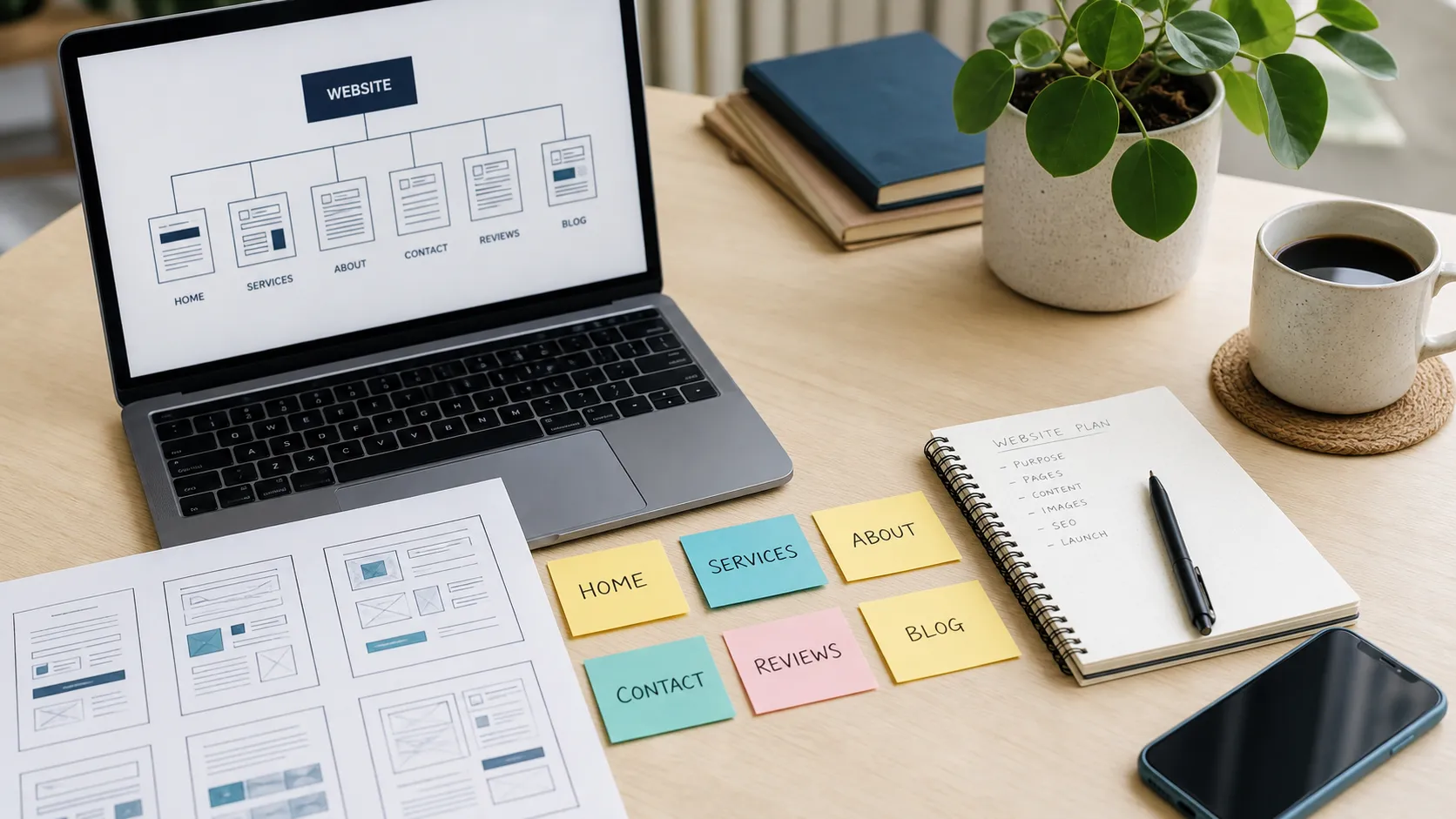
One of the first questions small business owners ask when planning a new website is simple:
"What pages do we actually need?"
It is a fair question. A website can start to feel bigger than expected once you begin listing services, locations, prices, photos, testimonials, forms, policies, blog posts, and all the other bits that might be useful.
The good news is that most small business websites do not need to be huge.
They just need the right pages, written clearly, arranged sensibly, and designed around what visitors are trying to do.
For many local businesses in Blackpool and across the Fylde Coast, the aim is usually straightforward: help people trust the business, understand what is offered, and make it easy to get in touch.
Here are the pages we would usually consider first.
1. Homepage
Your homepage is often the first page people see, but it should not try to say absolutely everything.
A good small business homepage should quickly answer:
- what you do
- who you help
- where you work
- why someone should trust you
- what they should do next
That sounds obvious, but plenty of homepages skip the basics and jump straight into vague slogans.
"Delivering excellence through innovative solutions"
Lovely. But can you fix my roof, cut my hair, fit a kitchen, design my website, or book me in for Tuesday?
Your homepage should give visitors enough confidence to keep exploring. It can introduce your key services, show a few trust signals, include reviews or examples of work, and guide people towards the most useful next page.
For local businesses, it also helps to make your location clear. If you are based in Blackpool and serve Lytham, St Annes, Poulton, Cleveleys, Fleetwood, or the wider Fylde Coast, say so naturally.
2. About Page
The about page is not just a place to write your life story, although a little personality can help.
For a small business, the about page should build trust.
People want to know who they are dealing with, especially if they are inviting you into their home, trusting you with a project, booking a service, or spending a meaningful amount of money.
A useful about page might include:
- who runs the business
- how long you have been trading
- what kind of customers you work with
- your experience or background
- your approach to customer service
- real photos of you, your team, your premises, or your work
This page does not need to sound corporate. In fact, it usually works better when it sounds like a real person wrote it.
If you are a local independent business, that is a strength. People often like dealing with businesses where they can see the person behind the name.
3. Services Page
If your business offers services, you need a clear services page.
This page should not be a rushed bullet list. It should help visitors understand what you offer and whether it matches what they need.
For a small service business, a strong services page should explain:
- your main services
- who each service is for
- what is included
- what problem it solves
- how someone can enquire
If you only offer a handful of simple services, one well-structured page may be enough.
If your services are more detailed, or if people search for them separately, it is often better to create individual service pages too. That gives each service enough room to explain the offer properly and can also help with search visibility.
For example, Rain Drop has separate service pages for web design, fast UK web hosting, SEO, and other key services because each one answers a different buying question.
4. Individual Service Pages
Individual service pages are useful when a visitor might arrive looking for one specific thing.
A plumber might have separate pages for boiler servicing, emergency callouts, bathroom fitting, and leak repairs. A beauty salon might have separate pages for nails, brows, facials, and bridal makeup. A guest house might have pages for rooms, breakfast, local attractions, and direct bookings.
These pages should not be copied and pasted with a few words changed. That tends to feel thin and unhelpful.
Each service page should answer the questions someone would naturally have about that specific service:
- what is included?
- how does the process work?
- what areas do you cover?
- how much guidance is available?
- what should the customer do before enquiring?
- what makes you a good choice?
Done properly, service pages can make your website far more useful. Done badly, they just create clutter.
The test is simple: would this page genuinely help a potential customer decide whether to contact you?
5. Contact Page
Your contact page should be easy. Painfully easy.
If somebody has decided to contact your business, the website should not make them work for it.
A good contact page usually includes:
- phone number
- email address
- contact form
- business address or service area
- opening hours if relevant
- links to active social profiles
- parking or access notes if customers visit you
Keep forms short unless you genuinely need more detail. A form with seventeen required fields can feel like applying for a mortgage when someone only wanted to ask about a quote.
It is also worth checking your form regularly. A beautiful contact page is not much use if enquiries vanish into a spam folder somewhere, never to be seen again.
6. Reviews or Testimonials Page
Reviews help visitors feel reassured before they contact you.
You do not always need a separate reviews page, especially if you only have a few testimonials. You can include reviews on your homepage, service pages, or near calls to action.
But if reviews are a major trust signal for your business, a dedicated page can work well.
This is especially useful for:
- trades
- hospitality businesses
- health and beauty businesses
- consultants
- local services where trust matters
Real reviews are much stronger than vague claims. "Friendly, reliable and did a great job" is often more persuasive than a paragraph of marketing copy trying to say the same thing with shinier shoes on.
If reviews are a weak spot, start by asking happy customers to leave feedback on your Google Business Profile. Just do it honestly. Buying reviews is not worth the risk, as we covered in our post on why you should not buy Google reviews.
7. Portfolio, Gallery or Case Studies
If your work is visual, a gallery or portfolio page can make a big difference.
This matters for builders, decorators, landscapers, photographers, salons, makers, venues, designers, and anyone whose finished work helps sell the service.
A useful portfolio page should show the kind of work customers actually want to see. Clear photos, short project notes, locations, before-and-after examples, and the problem you solved can all help.
For businesses where work is less visual, case studies can still be useful. They show how you helped a customer, what changed, and why your work mattered.
The key is to keep it real. A few honest examples often beat a huge gallery of tiny images with no context.
8. Frequently Asked Questions
FAQ pages and sections are useful when they answer real questions.
They are less useful when they exist only because someone heard that FAQs are good for SEO.
Good FAQs can reduce hesitation and save time by answering things people ask before enquiring, such as:
- how long does it take?
- which areas do you cover?
- do you offer free quotes?
- do you work with homes, businesses, or both?
- what happens after I enquire?
- can you help if I am not sure what I need?
FAQs can live on service pages rather than one big standalone page. That often works better because the questions stay close to the relevant service.
For example, questions about hosting belong near hosting information, while questions about website content belong near the planning advice. Our post on what content you need before a web designer can start is a good example of answering a real planning concern in detail.
9. Location or Area Pages
Location pages can be helpful for businesses that serve several towns or areas.
For example, a business based in Blackpool might also want to be found by customers in Lytham, St Annes, Poulton, Cleveleys, Fleetwood, Thornton, Kirkham, and nearby areas.
But there is an important warning here: location pages need to be genuinely useful.
A page that says the same thing ten times with only the town name changed is not helpful. Visitors can spot it. Search engines can too.
A good location page should reflect the area, the customers there, the services you offer there, and any practical details that matter. It should feel like it was written for real people in that place, not assembled from a spreadsheet during a moment of SEO optimism.
For local businesses, this can support local SEO when it is done properly.
10. Blog or Advice Section
Not every small business needs to blog every week.
In fact, most small businesses should not force themselves into a content schedule they cannot maintain. A quiet blog is fine. A blog full of rushed filler is less fine.
That said, an advice section can be very useful when you have questions worth answering.
Blog posts can help you:
- answer common customer questions
- explain your services in more depth
- show experience and personality
- support SEO without stuffing keywords into sales pages
- give you useful links to share with customers
Good blog topics usually come from real conversations. If customers keep asking the same thing, that is often a strong sign it deserves a post.
For example, posts such as how to tell if your website is out of date or why your competitor is ranking above you on Google work because they answer questions business owners already have.
11. Privacy Policy and Legal Pages
These pages may not be exciting, but they matter.
Most business websites need a privacy policy, especially if they collect personal data through contact forms, analytics, booking systems, ecommerce, newsletter signups, or enquiry tools.
Depending on your website, you might also need:
- cookie policy
- terms and conditions
- refund policy
- delivery information
- accessibility statement
Ecommerce websites usually need more legal and policy content than simple brochure websites. If you are unsure, it is worth getting proper legal guidance rather than borrowing a random policy from the internet and hoping nobody notices.
Do You Need All These Pages Straight Away?
No.
A small business website can start lean and grow over time.
For many businesses, the best starting point is:
- homepage
- about page
- services page
- contact page
- privacy policy
Then you can add individual service pages, location pages, reviews, case studies, FAQs, and blog posts as the business grows.
This is often a better approach than launching with twenty thin pages that nobody really had time to write properly.
The Best Website Structure Depends on the Business
A local tradesperson does not need the same website structure as a guest house, an online shop, a charity, or a consultant.
The right pages depend on:
- what you sell
- how people choose you
- how much trust they need before contacting you
- whether you serve one area or several
- whether people search for individual services
- how much your website needs to do after launch
That is why good small business web design should start with understanding the business, not forcing every client into the same page list.
A Simple Rule of Thumb
If a page helps a customer understand, trust, compare, choose, or contact your business, it probably has a purpose.
If it only exists because someone wanted another keyword on the website, it probably needs more thought.
Need Help Planning Your Website Pages?
If you are planning a new website and are not sure what pages you need, you do not have to work it all out alone.
At Rain Drop, we help small businesses shape websites that are clear, fast, mobile-friendly, and easy for customers to use. That might mean a simple brochure website, a more detailed service-led site, or one of our affordable Lighthouse Sites monthly website packages.
If you would like honest advice, feel free to get in touch. We can usually point you in the right direction, even if you are still at the rough-notes-and-logo-somewhere-in-an-email stage.